Ecommerce development: stores built to sell, not just to show.
An ecommerce site succeeds at exactly one moment: when a stranger trusts it enough to pay. Everything we build — catalog, product pages, cart, checkout — is engineered toward that moment.
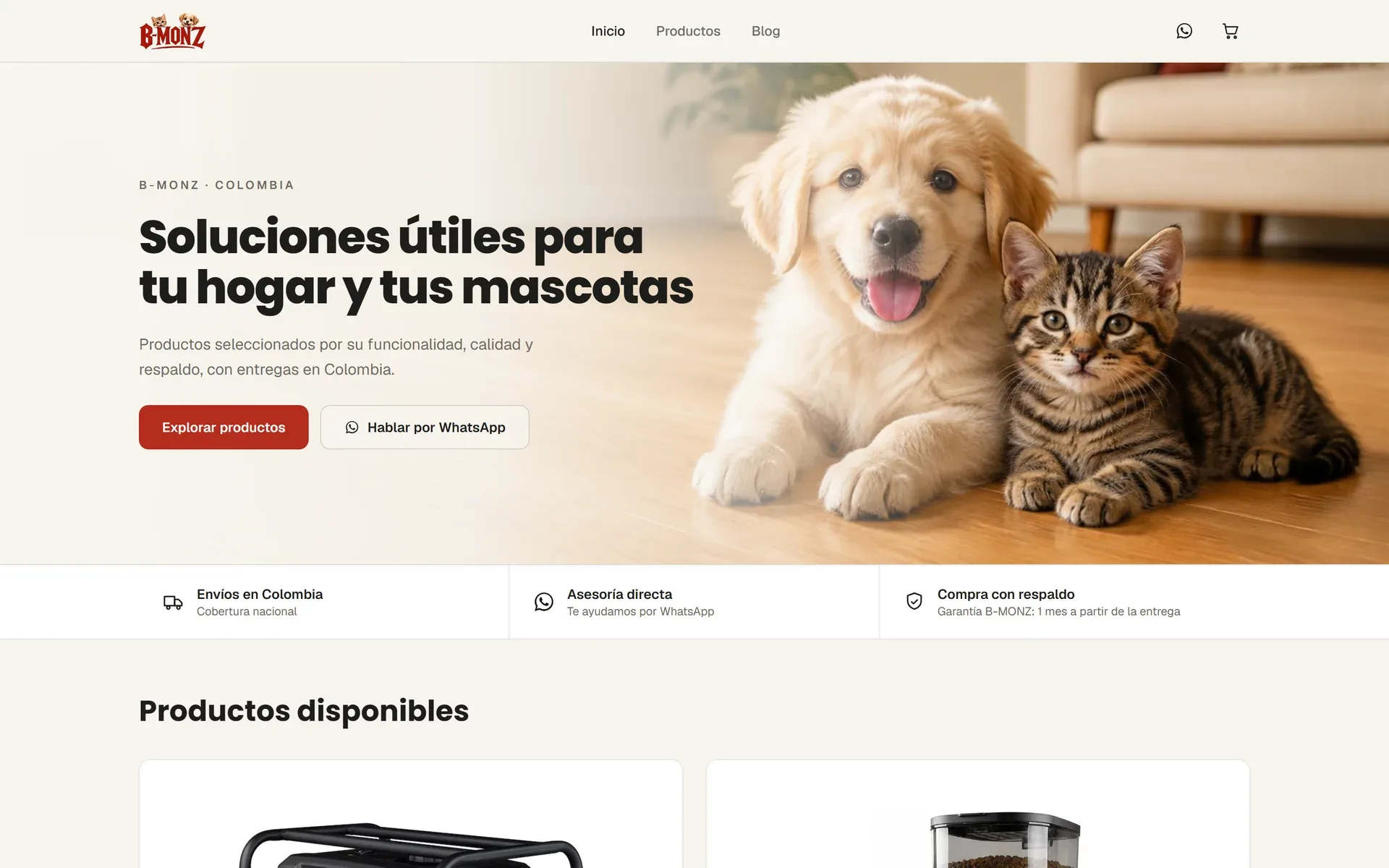
We have built and shipped real stores: an Israeli smart-lock shop selling in shekels with local payment expectations, and a Colombian product store built mobile-first around WhatsApp advice. Different markets, same discipline: clear product presentation, frictionless path to purchase, and payment options customers recognize.
Your store includes the commercial plumbing that actually sells: search-indexable product pages, structured data so products can appear richly in Google, order notifications, and analytics that show where buyers drop off.
What your store includes
- ●Product catalog with categories and search-friendly URLs
- ●Cart and checkout designed for mobile
- ●Payment integration fit to your country and business
- ●Product SEO: indexable pages and structured data
- ●Order and inquiry notifications
- ●Multi-language and multi-currency where needed
What separates a store that sells from a catalog that sits
Most underperforming stores fail before the checkout: category pages that bury products, product pages missing the one photo or measurement the buyer needed, and a cart that surprises people with costs at the last step. We design the buying path first — how a stranger goes from landing to trusting to paying — and only then decorate it.
Payment is where trust is won or lost, so stores we build present the payment methods the market actually recognizes. Our own portfolio shows the range: Kav Magen sells smart locks to Israelis in shekels with the local methods Israeli buyers expect, while B-MONZ serves Colombian shoppers who want to ask a question on WhatsApp before committing. Same discipline, completely different buying cultures.
What we set up in a store build
A serious store is more than a theme. This is the commercial plumbing that comes with our builds:
- ●Product architecture: categories, filters, variants and search-friendly URLs
- ●Product pages built to answer buying objections — photos, specs, availability
- ●Checkout tuned for mobile with the market's expected payment methods
- ●Product structured data so items can appear richly in Google results
- ●Order notifications to you and confirmation flows to the buyer
- ●Analytics on the funnel: where buyers drop, not just how many visited
- ●Inventory and shipping rules matched to how you actually fulfill
Replatforming an existing store
Moving a store is a migration project, not a rebuild-and-pray. Products, categories, customers and order history move in a planned order; every old product URL gets a redirect so accumulated search equity survives; and the old store stays live until the new one has proven itself. If you are leaving a platform because of fees or limits, we will tell you honestly whether the move pays for itself — sometimes it doesn't.
Start selling properly.
Start my websiteStores you can browse
Kav Magen sells smart locks in Hebrew with prices in ₪. B-MONZ presents products for the Colombian market with WhatsApp-first advice. Both live, both real.

Which platform do you build stores on?
Depends on your catalog, market and operations. We've shipped stores on established ecommerce platforms and built custom storefronts; the proposal explains the choice for your case.
Can customers pay by card, wallet or local methods?
Yes — we integrate the methods your market expects: cards, Apple Pay/Google Pay where the provider supports them, PayPal, and local options such as Israeli סליקה providers, subject to each provider's availability and approval.
Can you migrate my existing store?
Yes, including products, categories and — critically — redirects that preserve your existing Google presence.
How many products do I need for a store to make sense?
There is no minimum — a two-product store with a clear buying path outsells a five-hundred-product catalog nobody can navigate. What matters is whether people can find, understand and pay for what you sell.
Can the store speak more than one language or currency?
Yes. Multi-language stores get real localized pages (not a translate widget), and currency presentation follows the market. Kav Magen in our portfolio sells entirely in Hebrew with shekel pricing.
Related services
Start selling properly.
Tell us what you sell and where — we'll design the store around it.